
Comet 90004862 C/2024 N3 (Sarneczky) Observation Details
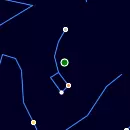/90004862 C/2024 N3 (Sarneczky).png)
C/2024 N3 (Sarneczky) Daily Motion
90004862 C/2024 N3 (Sarneczky) will be visible until July, 28, when it will move too close to the Sun. During this time, its proximity to the Sun will cause it to disappear from the night sky, making it unobservable for a while.
C/2024 N3 (Sarneczky) Visibility on March 25
90004862 C/2024 N3 (Sarneczky) is Not visible tonight
C/2024 N3 (Sarneczky) Rise and Set Timetable
| Time | Elevation | |
| C/2024 N3 (Sarneczky) is always above the horizon | ||
Moon Rise, 29.9% illuminated 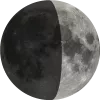 | 08:37 | 36° |
| Sunset | 17:22 | 31° |
| Civil sunset | 17:49 | 32° |
| Astrosession begin | 18:51 | 34° |
| C/2024 N3 (Sarneczky) is always above the horizon | ||
| Moon Set | 00:30 | 45° |
| C/2024 N3 (Sarneczky) transit | 02:01 | 46° |
| Astrosession end | 03:35 | 45° |
| Civil sunrise | 04:37 | 44° |
| Sunrise | 05:04 | 43° |
Track C/2024 N3 (Sarneczky) Position Throughout the Night
← Wed, 25 March 2026 →
| Time | |
| Altitude | |
| Azimuth |
Shift the map to change the time and observe C/2024 N3 (Sarneczky) changing position in the night sky.
C/2024 N3 (Sarneczky) Description
C/2024 N3 (Sarneczky), designated as 90004862 C/2024 N3 (Sarneczky), is a comet on a hyperbolic (unbound) trajectory. At the moment, 90004862 C/2024 N3 (Sarneczky) is 4.383 AU (655,627,628 km) from Earth, and it is located in the constellation Ursa Minor.Current position of C/2024 N3 (Sarneczky) in Solar System
| Date | Wed, 25 March 2026 |
| Distance from Earth to C/2024 N3 (Sarneczky) | 4.3881 AU (656,450,416km) |
| Elongation | 95° |
| Angular diameter | " |
| Magnitude | 20.1 |
Finder Chart for C/2024 N3 (Sarneczky)
Double-click to unlock the map.
| Object name | 90004862 C/2024 N3 (Sarneczky) |
| Field of view | |
| Limiting magnitude | |
| 90004862 C/2024 N3 (Sarneczky) coordinates | 15.21638, 80.94519 |
| Center coordinates | 15.21638, 80.94519 |
Annual motion of C/2024 N3 (Sarneczky)
| Date | Wed, 25 March 2026 |
| Twighlight start | 18:46 |
| Twighlight end | 03:30 |
| Twighlight duration | 9h 44m |
| Rise | 90004862 C/2024 N3 (Sarneczky) is always up |
| Set | 90004862 C/2024 N3 (Sarneczky) is always up |
| Elevation at transit | 46° |
| Transit time | 02:01 |
| Equatorial coordinates | RA: 15h 05m 23s", Dec: 81° 05' 25s |
| Magnitude | 20 |
| Constellation | Ursa Minor |
The graph illustrates the annual visibility pattern of a C/2024 N3 (Sarneczky), providing a comprehensive overview of its daily appearances and transit times throughout the year.
The graph is structured with the vertical axis showing the hours of the day, ranging from 12 AM to 12 AM the next day, while the horizontal axis spans each day of the year.
The reddish shaded area indicates the periods when the C/2024 N3 (Sarneczky) is above the horizon, visible to observers. The white line marks the times when the celestial object reaches its highest point in the sky each day, known as the transit. You can also view detailed visibility information in a dedicated table, including exact rise, transit, and set times for each date.
The graph is structured with the vertical axis showing the hours of the day, ranging from 12 AM to 12 AM the next day, while the horizontal axis spans each day of the year.
The reddish shaded area indicates the periods when the C/2024 N3 (Sarneczky) is above the horizon, visible to observers. The white line marks the times when the celestial object reaches its highest point in the sky each day, known as the transit. You can also view detailed visibility information in a dedicated table, including exact rise, transit, and set times for each date.
Astrometric & Physical Parameters of 90004862 C/2024 N3 (Sarneczky)
Coordinates & Visibility
| Right Ascension | 15.21638° |
| Declination | 80.94519° |
| Magnitude | 20.1 |
| Constellation | Ursa Minor |
| Elevation | 43.4° |
| Azimuth | 8.9° |
Acknowledgments
We acknowledge NASA's Jet Propulsion Laboratory (JPL) for providing essential data on asteroids and comets through their Small-Body Database (SBDB) and Center for Near-Earth Object Studies (CNEOS). Their continuous efforts in tracking and cataloging these celestial bodies make it possible to offer accurate and up-to-date information on their positions, orbits, and physical characteristics.